
The Advantages of Using Drones on Large-Scale Farms
How drones cut spraying time, input waste and labour on large farms — from precision application and mapping to early disease detection.
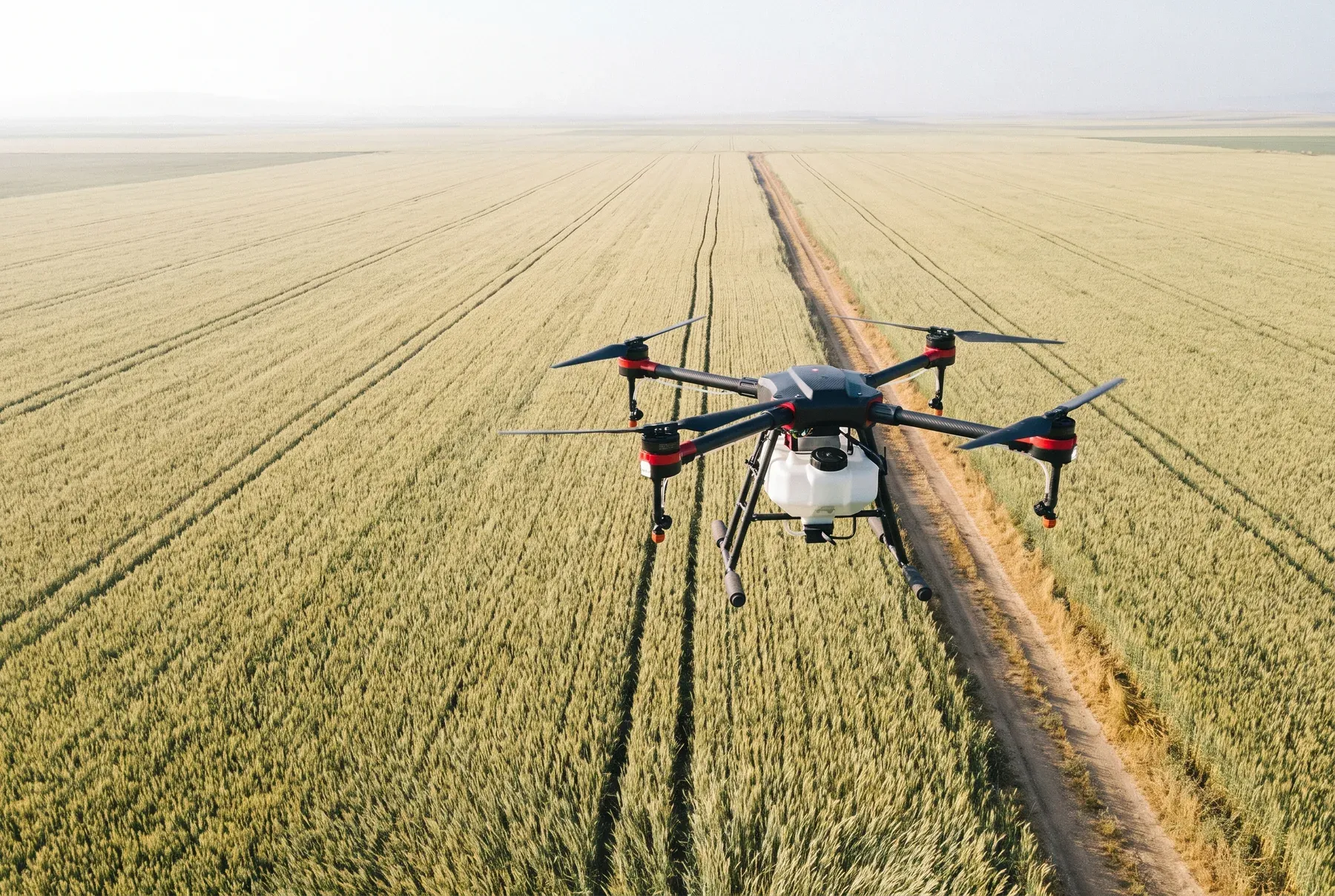
Efficiency matters in farming, and nowhere more than on large-scale farms. Managing extensive land involves many stages — irrigation, spraying, fertilising and crop monitoring among them — and done by conventional methods these can be both slow and costly. Drone technology helps large farms run faster, more efficiently and more sustainably. So what exactly do drones offer a large agricultural operation?
Fast, Efficient Spraying and Fertilising
On large farms, spraying and fertilising are usually done by tractor or aircraft. Both methods can mean high fuel consumption, wasted chemicals and high costs. Agricultural drones, with their precision spraying systems, apply crop protection products and fertiliser only where they are needed, lowering costs and protecting the environment at the same time. Drones also cover large areas in far less time, which saves a great deal of labour.
Rapid Mapping and Efficient Management of Large Areas
One of the hardest parts of running a large farm is managing the whole of the land effectively and analysing its productivity. Drone mapping uses high-resolution imagery to assess crop growth, soil structure and signs of disease as they happen. That lets farmers intervene early and keep crop losses to a minimum.
Savings in Labour and Cost
On large farms, tractor-based spraying, fertilising and crop checks are expensive in both time and labour. Drone technology reduces the reliance on manual work, so field operations cost less to run. It also cuts the fuel burned by heavy machinery, which keeps operating costs down.
Early Detection of Disease and Pests
Across large holdings, pest infestations and disease can spread quickly and, if noticed late, cause heavy crop losses. With multispectral imaging and AI-assisted analysis, drones pick up the first signs of disease in plants and give farmers the chance to act quickly. That in turn makes better use of crop protection products and raises yields.
Making Better Use of Natural Resources
Using more water and fertiliser than a crop needs raises costs on a large farm and enlarges its environmental footprint. Drone technology shows which areas need more water or nutrients, so that only the necessary amount is used. That supports sustainable farming and helps farmers save money over the long term.
Conclusion: Drones Are Shaping the Future of Large-Scale Farming
Drones allow large agricultural businesses to produce faster, more efficiently and more sustainably. With advantages that span spraying, fertilising, crop monitoring, labour savings and the protection of natural resources, they are becoming an essential tool of modern farming. Manage your farm at its most efficient with Skytech’s agricultural drones — and take a step towards the future of farming today.