Long-term projects that establish new forest on land not classified as forest, then measure the carbon it captures and put that measurement through independent verification.
Skytech Carbon establishes new forest on land that is not forest, and turns the carbon that forest captures into a tradable credit. The land may be in state, foundation or private ownership; what decides eligibility is that it does not already carry forest status — ground that is already forest cannot be counted as newly captured carbon.
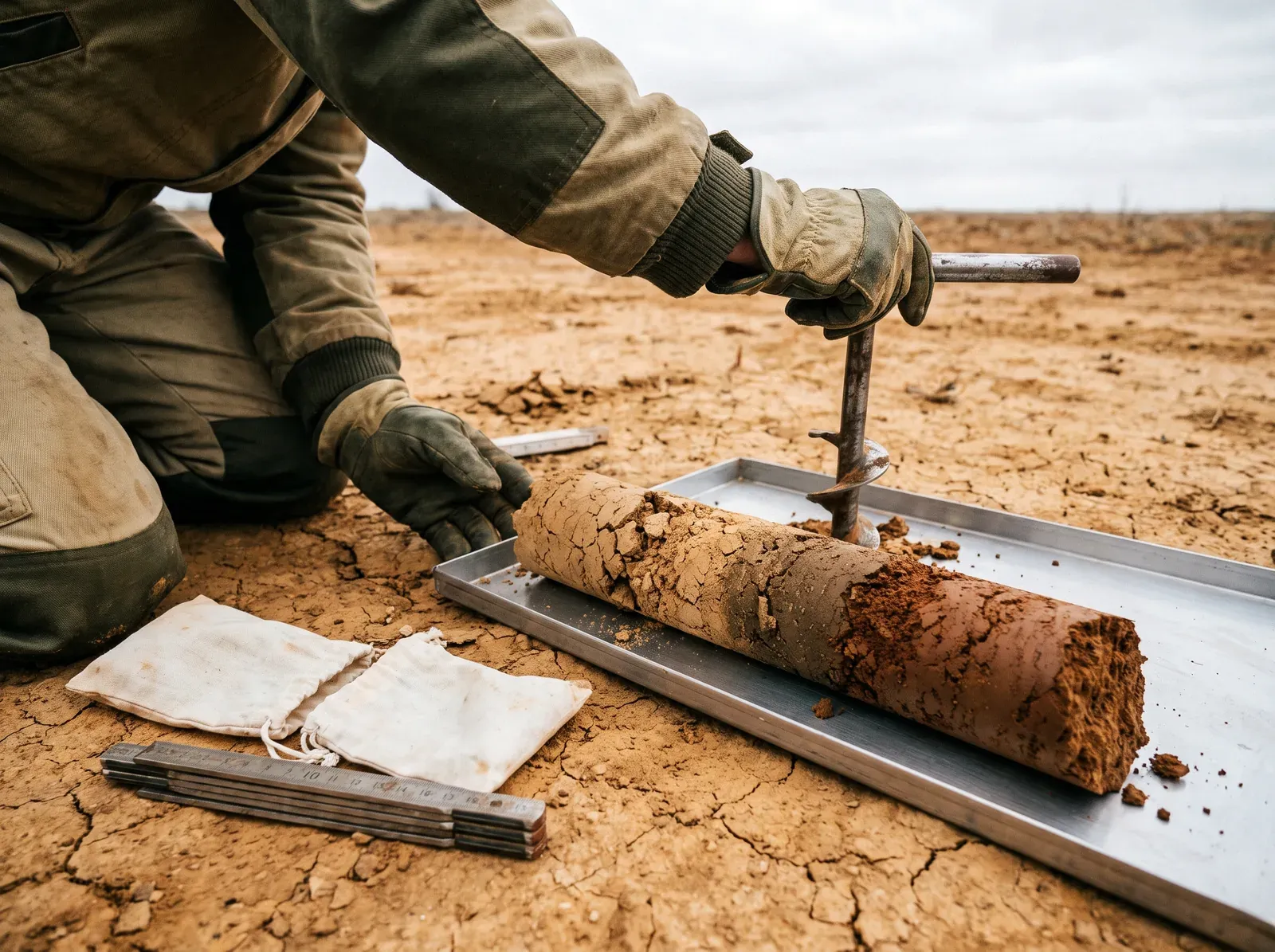
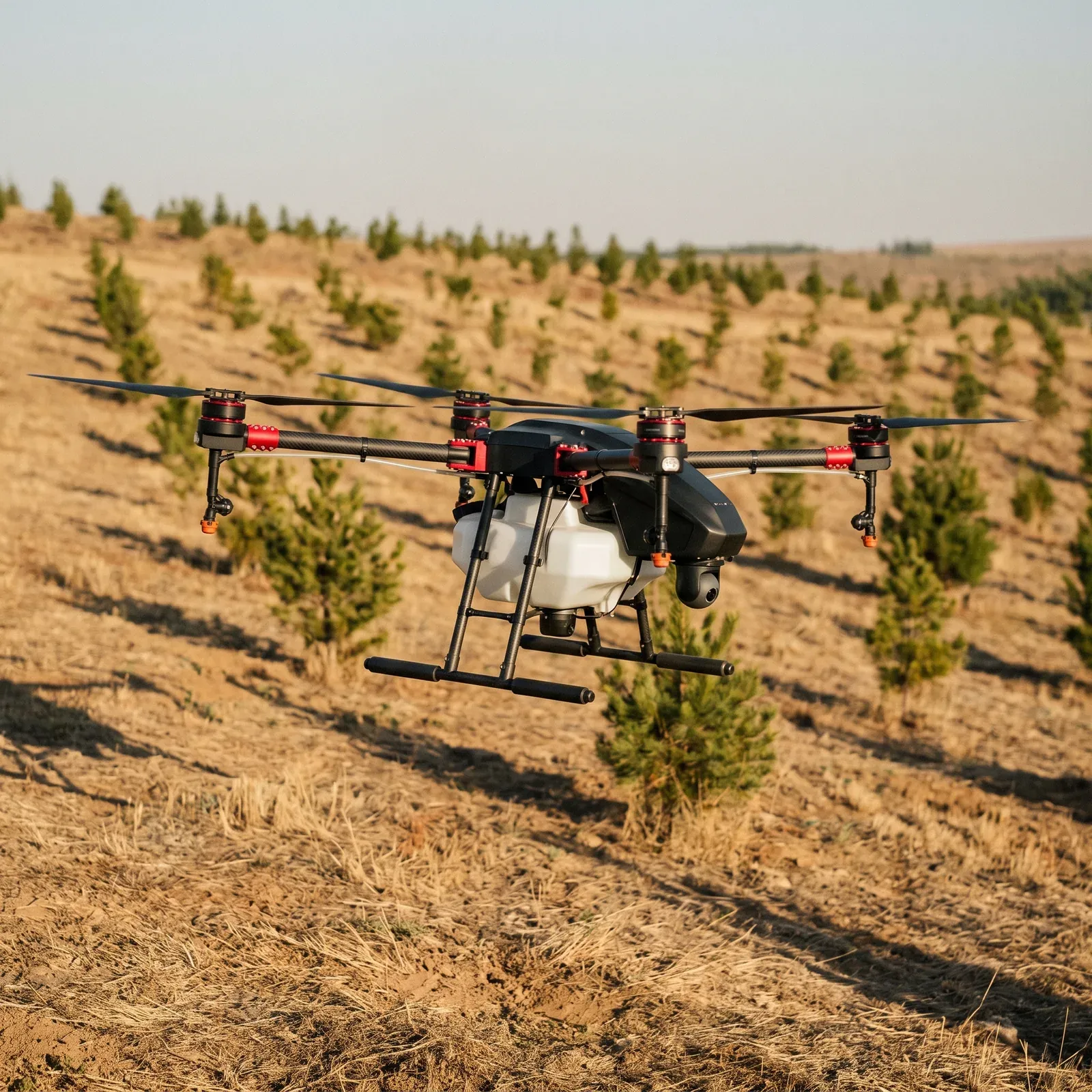
A project starts with soil analysis: baseline carbon stock, species selection and the site’s carbon potential are calculated from samples taken on the ground. Skytech Green’s field teams carry out planting, and Skytech Air’s fleet flies the area at intervals. Surviving sapling counts and biomass growth are derived from that imagery, reported against international methodology and put through independent audit. This is the division where the rest of the group’s work meets in a single business model.
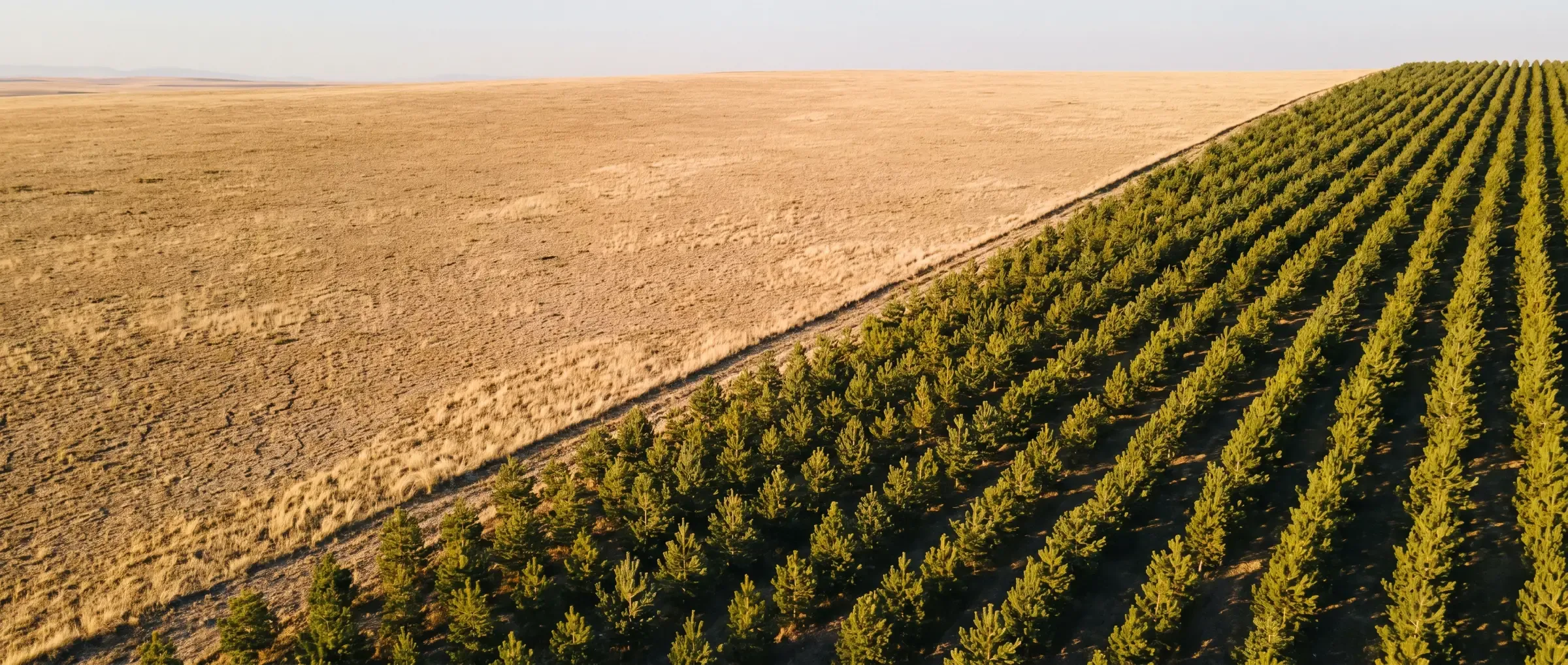
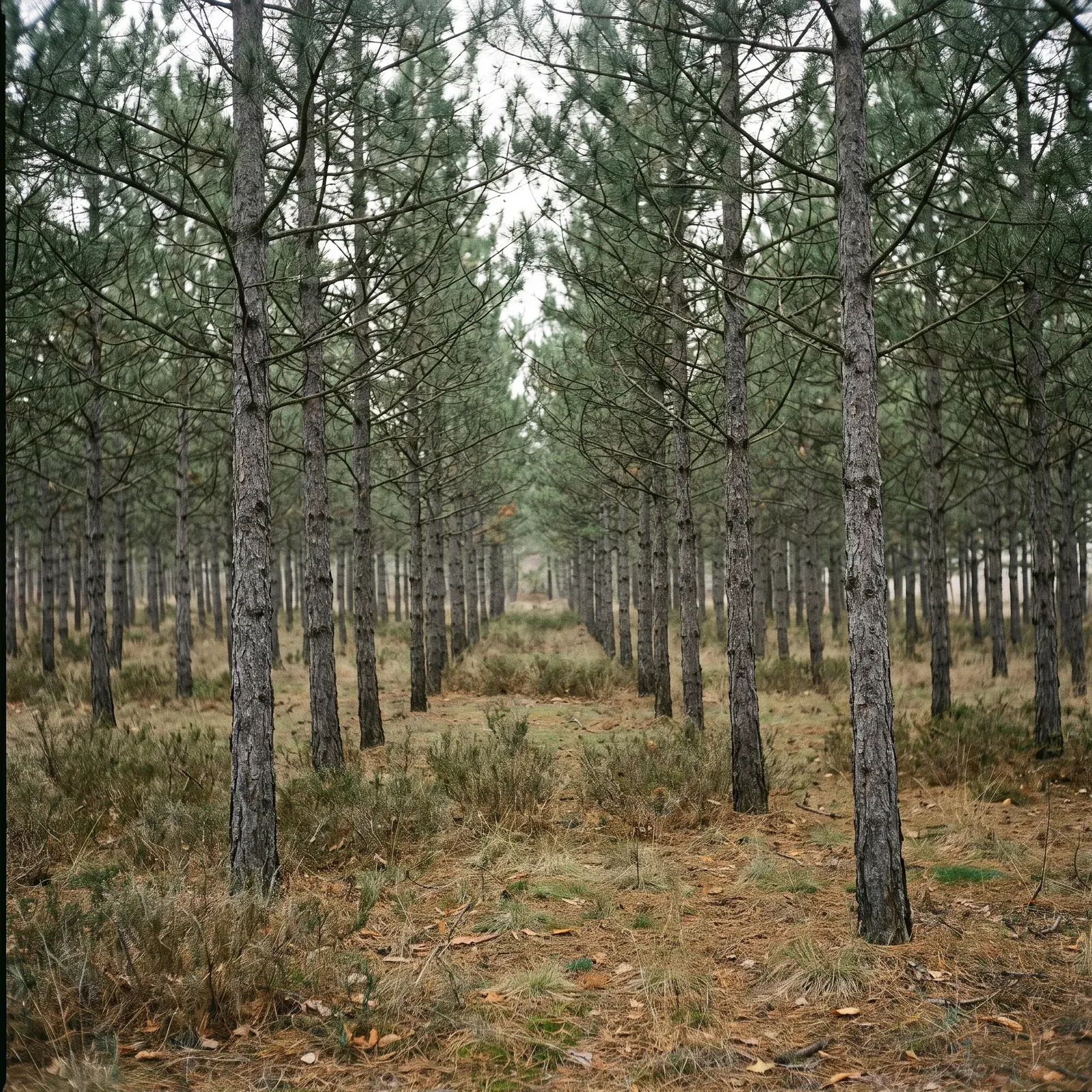
New forest is established on land that is not forest
How the work is done
Why only non-forest land?
A carbon sink project rests on establishing new forest on land that is not forest. The land may be in state, foundation or private ownership; what decides eligibility is that it does not already carry forest status.
Ground that is already forest cannot be counted as newly captured carbon, even if a new project is placed on it. Anything carrying forest status is therefore ruled out at pre-assessment.
How a project runs
From the day the decision is made to a verified credit, every step produces the record the next one is measured against.
01
Land pre-assessment
Parcel records, ownership status and land classification are reviewed. Anything carrying forest status is ruled out at this stage.
02
Soil analysis and feasibility
Baseline carbon stock, species selection and expected carbon potential over the project term are calculated from field samples.
03
Securing the land
A model matched to the ownership type: purchase or long-term lease on private land, lease on state and foundation land.
04
Establishing the forest
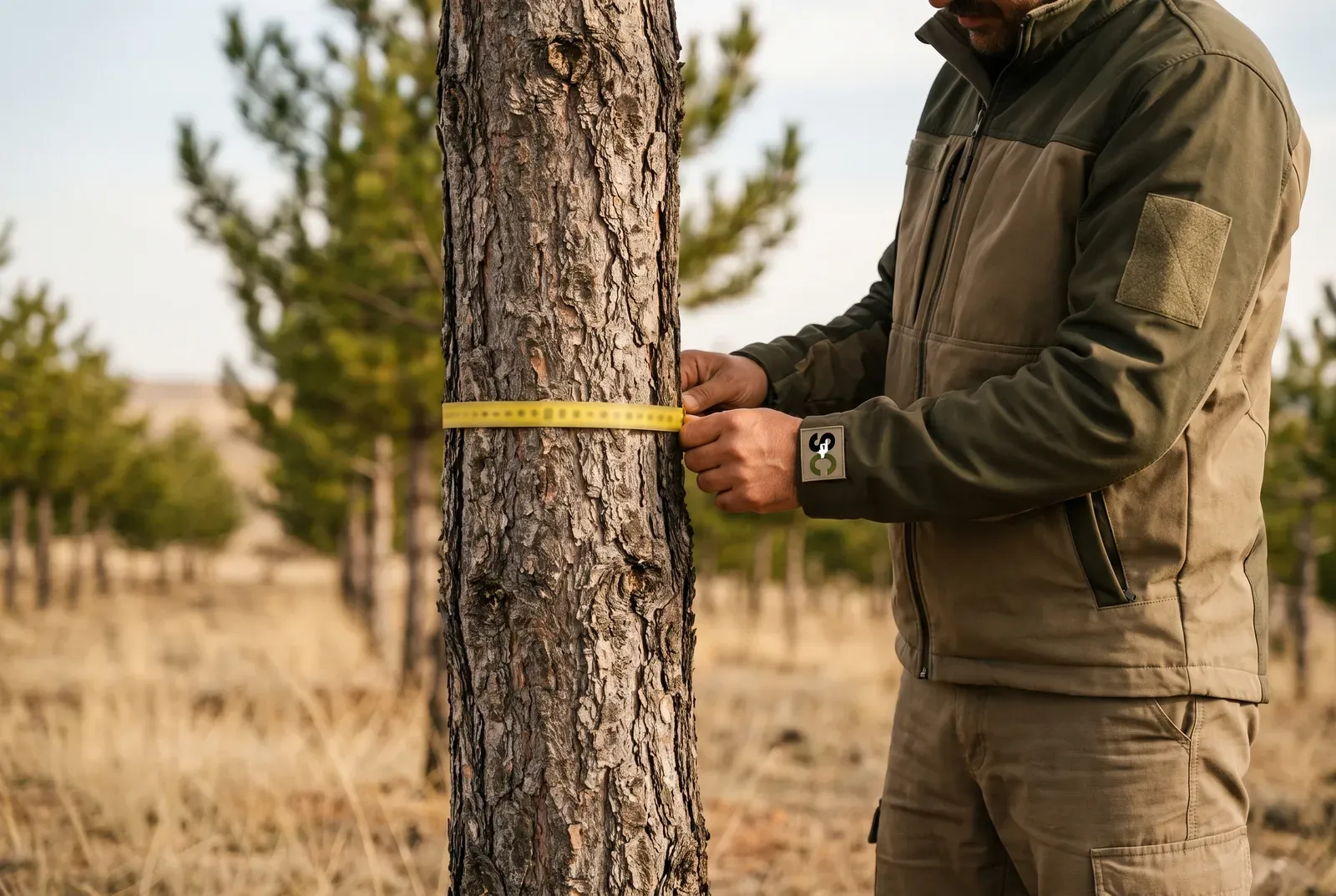
Skytech Green’s field teams carry out planting; every planting point is recorded against its coordinate.
05
Aerial monitoring
Skytech Air’s fleet flies the site at intervals; surviving sapling counts, growth and biomass gain are calculated from the imagery.
06
Verification and certification
Measurement data is reported against international methodology, put through independent audit and entered on the registry.
Project terms
Land
State, foundation or private land without forest status
Minimum area
3,500 dönüm
Project term
20 years, with a planned harvest at the end
Land model
Purchase or long-term lease (lease on state and foundation land)
Methodology
Projects are designed against Verra (VCS) and Gold Standard methodologies
Planting
Skytech Green field teams
Monitoring
Recurring flights by the Skytech Air fleet
Limits
Measurement and certification costs are spread across the area, so projects below 3,500 dönüm are not viable.
The relevant secondary legislation in Türkiye is not yet final; project terms are updated as it settles.
Capabilities
What this division does
The services and engineering scope we deliver.
Land pre-assessment
Parcel records, ownership status and land classification reviewed. Anything carrying forest status is ruled out at this stage.
Soil analysis and feasibility
Baseline carbon stock, species selection and expected carbon potential over the project term, calculated from field samples.
Securing the land
A model matched to the ownership type: purchase or long-term lease on private land, lease on state and foundation land.
Establishing the forest
Sapling planting and seeding, with every planting point recorded against its coordinate.
Aerial monitoring
The site flown at intervals; surviving sapling counts, growth and biomass gain calculated from the imagery.
Verification and certification
Measurement data reported against international methodology, put through independent audit and entered on the registry.
Platform
Design methodologies
VCSVerra (VCS)International methodology projects are designed against
GSGold StandardAlternative methodology framework
Sectors
Where we work
Private landowners
State and foundation land leases
Companies with emissions reporting obligations
Corporate carbon offsetting programmes
Agricultural businesses and cooperatives
From the field
Operating basis
How we operate
Projects are established only on land without forest status; existing forest cannot be used.
Projects run for 20 years, with a planned harvest at the end of the term.
Measurement and certification costs are spread across the area, so a minimum of 3,500 dönüm applies; below that a project is not viable.
The relevant secondary legislation in Türkiye is not yet final; project terms follow it as it settles.
A carbon sink project is a long-term project that establishes new forest on land that is not forest and turns the carbon that forest captures into a tradable credit. Skytech Carbon develops these projects on state, foundation and private land without forest status.
Which land qualifies for a carbon sink project?
Qualifying land is in state, foundation or private ownership and does not carry forest status. Existing forest cannot be used, because ground that is already forest does not count as newly captured carbon. Measurement and certification costs are spread across the area, so a minimum of 3,500 dönüm applies.
Is the land bought or leased?
Land joins a project on terms matched to its ownership: purchase or long-term lease on private land, lease on state and foundation land.
How is the carbon measured and verified?
A project begins with soil analysis that establishes the baseline carbon stock. After planting, Skytech Air’s fleet flies the site at intervals and surviving sapling counts and biomass growth are calculated from the imagery. The measurement data is reported against the Verra (VCS) and Gold Standard methodologies the projects are designed to, put through independent audit and entered on the registry.
How long does a carbon sink project run?
Skytech Carbon projects run for 20 years, with a planned harvest at the end of the term. The relevant secondary legislation in Türkiye is not yet final, so project terms are updated as it settles.
Have an enquiry for this division?
Reach our technical team and we will size the solution and prepare a quote.