
Drones in Farming Compared with Conventional Methods
Drone versus tractor and manual methods, side by side: time and labour, precision of application, fuel and chemical costs, and access to difficult ground.
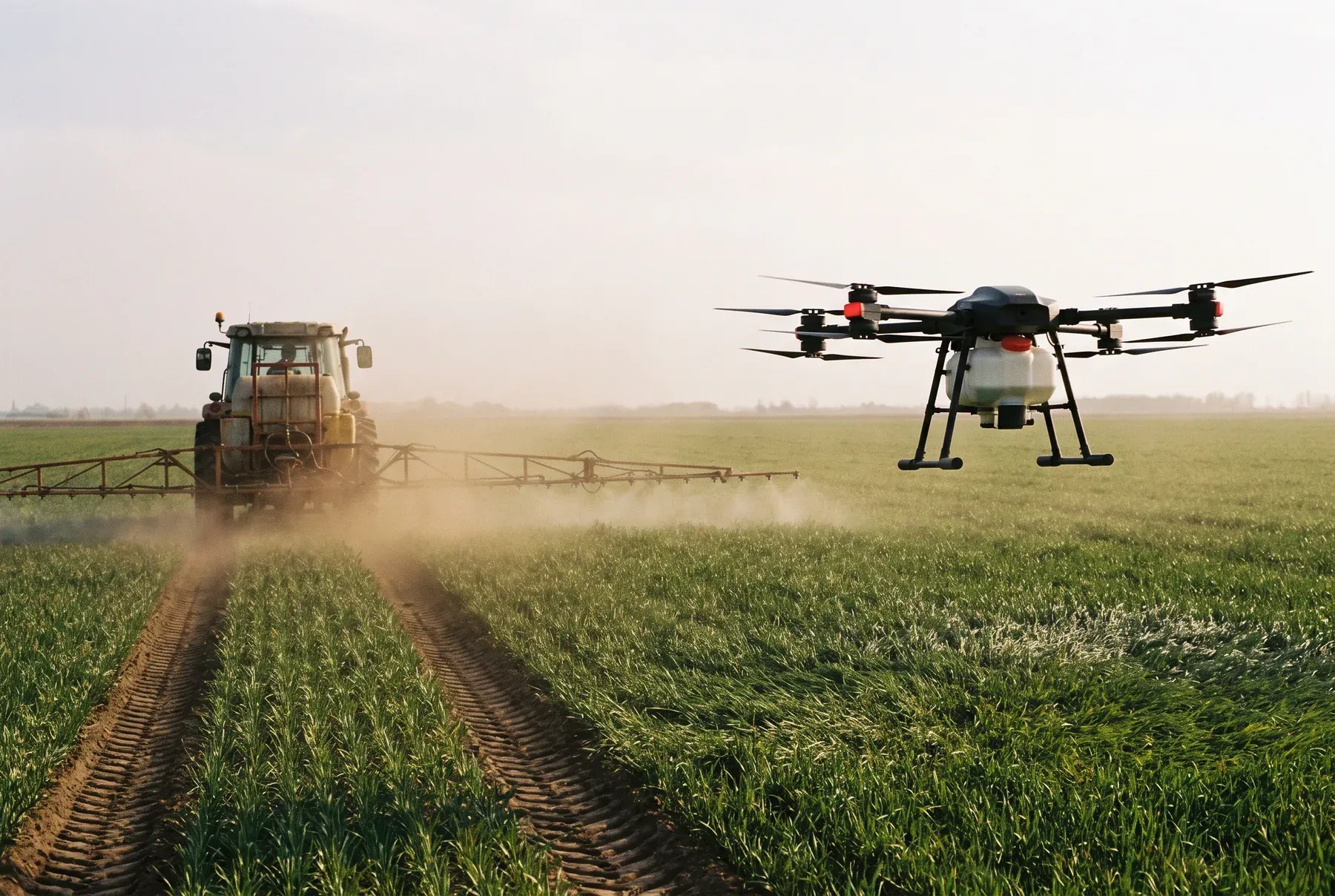
Agriculture is going through a major transformation as technology develops. Spraying, fertilising and yield analysis once done by conventional methods are becoming faster, more precise and more cost-effective thanks to drone technology. Agricultural drones make modern farmers’ work easier, saving time and delivering precise spraying and high productivity. So how does using drones in farming differ from conventional methods?
Time and Labour Efficiency
In conventional farming, spraying and fertilising are usually done by tractor or by hand. These methods take time and, on large holdings, demand a great deal of labour. Agricultural drones cover large areas quickly and can cut operating time by up to 60%. For example, a drone can spray a one-hectare field in a few minutes, while the same job with a tractor or knapsack sprayer can take hours. Drones also reduce the need for manual labour, saving on workers’ costs.
Precision Farming and Productivity
Conventional spraying and fertilising usually treat large areas evenly. That can lead to unnecessary over-use of crop protection products and fertiliser, or leave some areas under-fed. With advanced sensors and mapping systems, precision-farming drones apply the correct dose of crop protection and fertiliser according to what the crop needs. This maximises crop health while helping to lower the cost of spraying and fertilising.
Cost Savings and Environmentally Friendly Solutions
Farm machinery carries high operating costs because of fuel consumption and maintenance. Spraying by drone can save up to 30% of fuel, lowering farmers’ operating costs. Drones also prevent unnecessary use of crop protection products and fertiliser, making farming more environmentally responsible. Beyond using fewer chemicals, drone technology also helps conserve water resources.
Access and Use on Difficult Ground
Conventional methods can be hard to apply on uneven terrain, in tight spaces or on wet ground. Where tractors cannot enter or workers struggle to reach, agricultural drones apply from the air with ease, a major advantage for growers. Spraying by drone between trees, for instance, or in hard-to-reach areas such as marshland, makes the job far easier. For farmers working orchards and steep slopes in particular, this is a transformative change.
Conclusion: The Future of Farming Is Being Shaped by Drone Technology
Conventional farming methods have been used for many years, but agricultural drone technology offers farmers far greater advantages in speed, precision, cost savings and environmental sustainability. Drone spraying, drone fertilising and precision-farming solutions are raising productivity across the sector and setting new standards for modern farming. Today, farmers are investing in drone technology to keep yield losses to a minimum and achieve the highest production. If you are looking for innovative, sustainable solutions in farming, discover Skytech’s drone technology and take a step towards the future of farming.