
How Drone Spraying Protects the Environment: Ways to Use Fewer Chemicals
Targeted drone spraying applies crop protection only where it is needed — reducing chemical use, protecting soil and water, and keeping operators away from exposure.
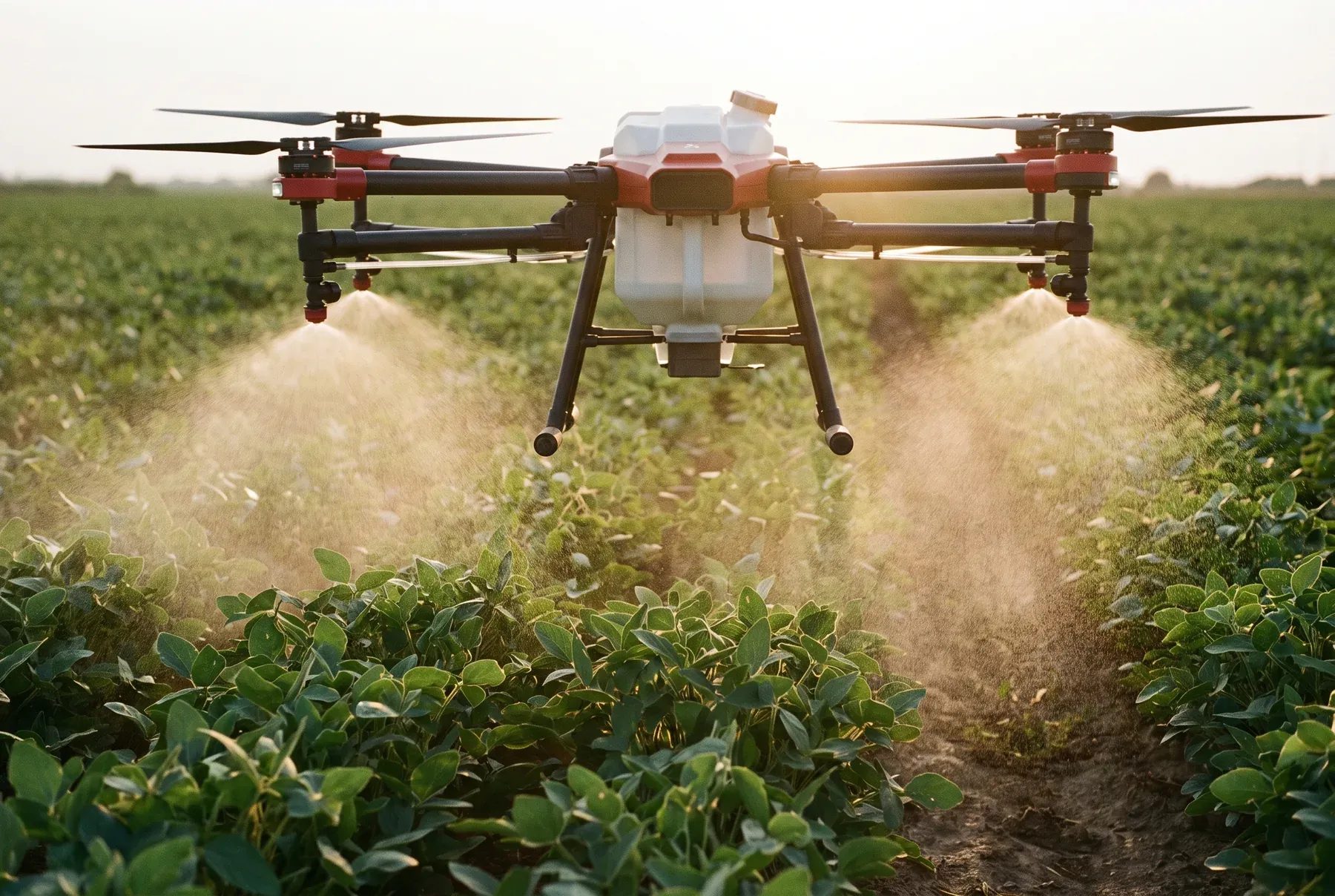
Conventional farming methods spray large areas wholesale, which can drive chemical use up unchecked and cause environmental harm. Precision agricultural drones, by contrast, spray according to what the crop actually needs — protecting the environment while lowering farmers’ costs. Through precise spraying technology, accurate dosing and intelligent mapping, drone application keeps chemical use to a minimum and contributes to sustainable agriculture.
Precise, Targeted Spraying
With conventional tractor or aircraft application, chemicals spread over wide areas and more is used than necessary. Crops can end up receiving more than they need, and surplus product builds up in the surrounding environment. Drone spraying systems use precision spraying technology to treat only the areas that need it, preventing waste and ensuring the right quantity of chemical is applied.
Up to 30% Less Chemical Use
Using smart sensors and mapping technology, agricultural drones identify the areas where disease or harmful insects are concentrated and treat only those. In this way chemical consumption can fall by up to 30%. Using less product keeps soil and water from being exposed to chemical contamination — a significant benefit for both the environment and human health.
Protecting Soil and Water
Overuse of crop protection products can leave chemical residues in the soil and allow them to reach water sources. Rain in particular can carry chemicals into groundwater and river systems, causing environmental damage. Because drone spraying is applied only to defined areas, it helps keep soil and water clean and protects natural ecosystems.
Effects on Human and Animal Health
Conventional spraying can pose a health risk to farmers and to the living things around them. During manual or tractor spraying, farmers may be directly exposed to chemicals, which can lead to problems ranging from respiratory illness to skin conditions. Spraying remotely by drone lets farmers apply product safely without coming into contact with it. And because application is aimed directly at the target areas, creatures critical to the ecosystem — bees, birds and other beneficial insects — are protected.
Conclusion: Drones for Environmentally Friendly, Sustainable Farming
Drone spraying is becoming an essential part of modern agriculture: a technology that protects the environment and lowers farmers’ costs. By reducing chemical consumption through precise spraying, correct dosing and environmentally aware application, it conserves natural resources and makes agricultural production more sustainable. Take a step towards more efficient, economical and environmentally friendly farming with Skytech’s agricultural drones.