
Tips for Maintaining Agricultural Drones and Extending Their Service Life
A practical maintenance routine for agricultural drones: pre- and post-flight checks, battery care, motor and propeller cleaning, sensor care, and software and calibration.
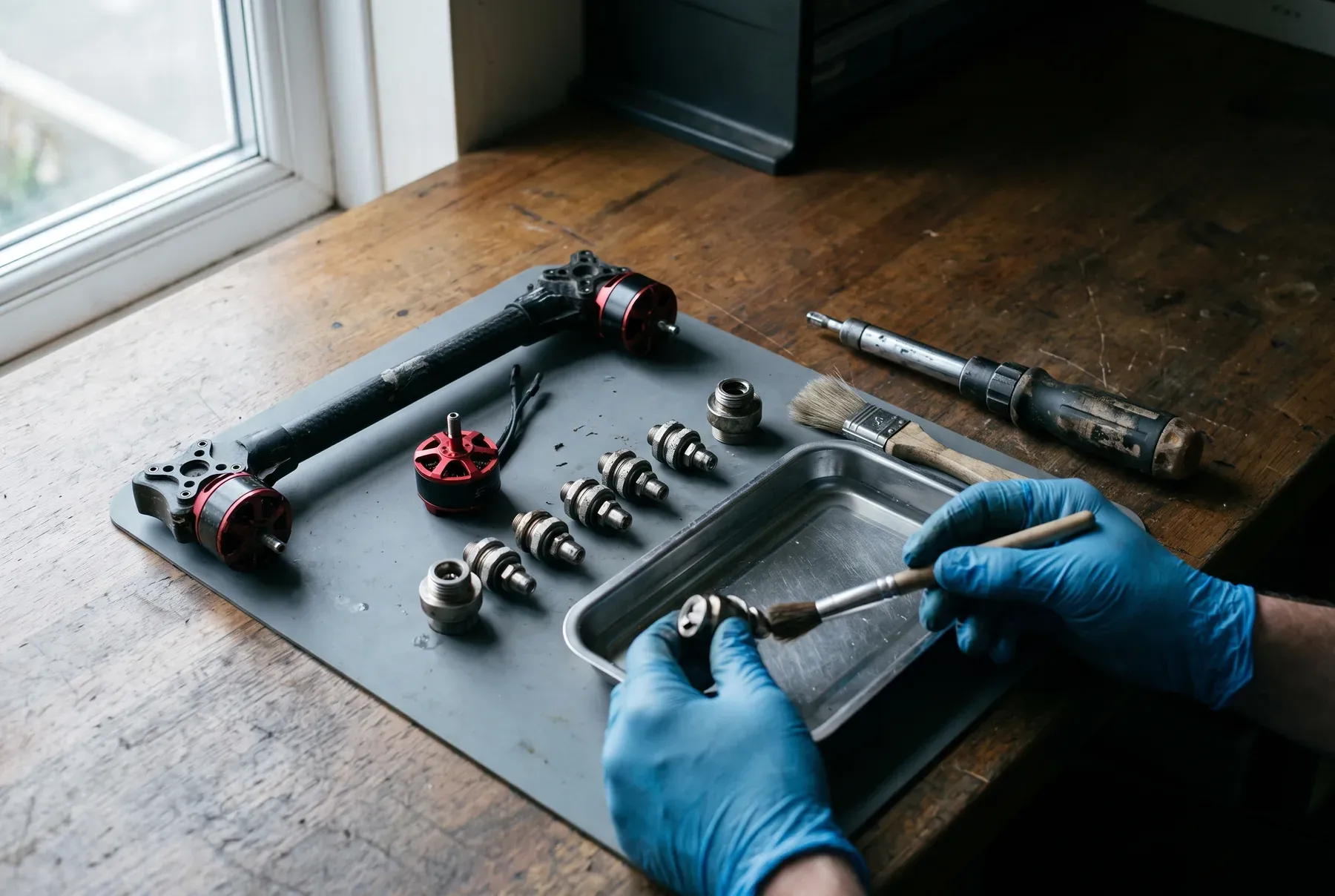
In agriculture, drone technology gives farmers major advantages in precision spraying, fertilising, crop monitoring and much more. But for these drones to work efficiently over a long service life, regular maintenance and correct use are essential. Neglecting maintenance can lead to poor performance, unexpected failures and high repair costs. So what should you pay attention to in order to keep your agricultural drone in the best condition? Here are the key maintenance tips for a long service life.
Carry Out Pre-Flight and Post-Flight Checks
✅ Check the battery level and connections. Taking off on a low battery can affect how long the drone stays in the air.
✅ Inspect the propellers for damage and check that the motors are clean. Cracked or broken propellers can upset the balance and cause vibration.
✅ Check RTK/GPS signal strength and software updates. GPS calibration is important for precise flight.
✅ Clean the drone properly to protect it from the elements. Drones used in farming are exposed to residues of crop protection products and fertiliser, so cleaning after every flight should never be skipped.
✅ Wipe the propellers and landing gear with clean water or a suitable cloth to remove chemical residue.
Take Particular Care of the Batteries
The battery is one of a drone’s most critical components. Incorrect use can shorten battery life and reduce performance.
✅ Do not overcharge the batteries or let them run flat. Keeping the charge between 20% and 80% extends their life.
✅ Avoid using batteries in very cold or very hot conditions. Excessive heat can cause batteries to swell, while cold weather makes them discharge quickly.
✅ Store batteries at a suitable temperature after flight. Do not leave them in direct sunlight or in damp conditions.
Keep Motors and Propellers Clean to Maintain Efficiency
✅ Check the propellers for soil, sand or plant debris. Any deformation of the propeller surface can cause balance problems in flight.
✅ Prevent dust and farm debris from building up inside the motors. Cleaning them with compressed air or a dry cloth extends their life.
✅ Check propeller tightness regularly. Loose propellers can be dangerous in flight.
Do Not Neglect Sensor and Camera Cleaning
The multispectral cameras and sensors used on drones are critical to precision-farming analysis. Dust, dirt or chemical residue can affect image quality and the accuracy of the analysis.
✅ Clean the sensors and camera with a soft cloth. Keep them away from hard objects to avoid smudges and scratches.
✅ Do not clean the lenses with excessive water or chemicals. Use dedicated lens-cleaning cloths.
✅ Test image quality before flight. If images are blurred or colours look wrong, review the camera settings.
Keep Up with Software and Calibration Updates
✅ Update the drone’s firmware and flight software regularly. Out-of-date software can cause errors in flight.
✅ Do not skip calibration. GPS, IMU and compass calibration are essential for precise flight.
✅ Back up flight data and mapping analyses so that you never lose your past flight records.
Conclusion: Longer-Lasting, More Efficient Drones Through Regular Maintenance
With efficient and correct use, agricultural drones can deliver high performance for many years. Regular maintenance, proper battery management, cleaning routines and software updates ensure you get the most from drone technology. With Skytech’s expert team, you can get all the maintenance services you need to keep your agricultural drones in the best condition.